
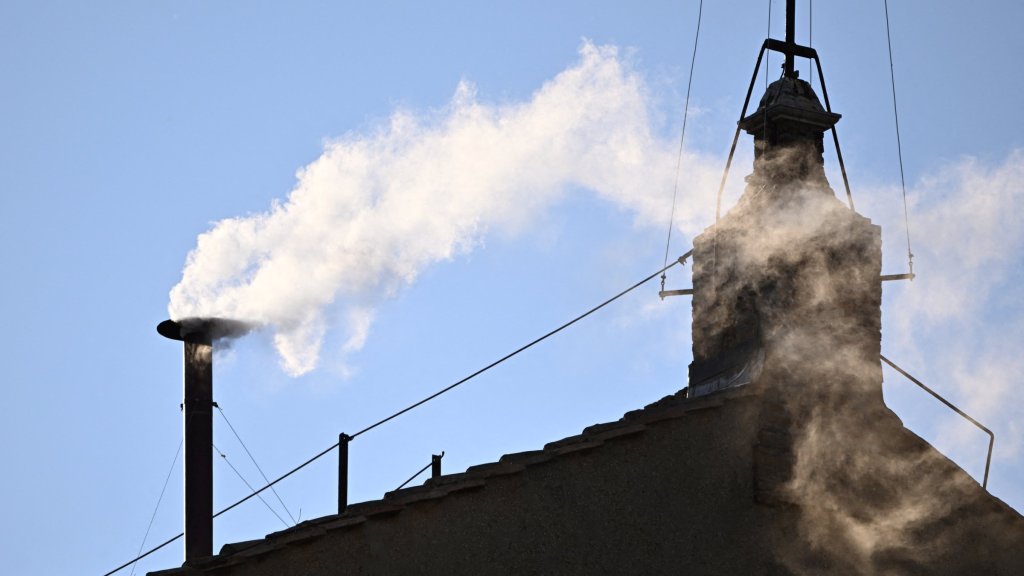
Even before his name echoed from the balcony of St. Peter’s Basilica, the crowds below were already chanting in celebration: “Viva il Papa!” That anticipation, that moment, became history. Robert Francis Prevost, a 69-year-old missionary priest from Chicago, has been elected the 267th pope of the Roman Catholic Church. He will be known to the world as Pope Leo XIV — the first American-born pontiff, a man shaped by Latin America, immigrant roots, and a deep commitment to the marginalized.
For many, Leo XIV is both a surprise and a reflection of the global Church’s evolving identity. Though American by birth, Leo spent much of his priestly life in Peru, a country he lovingly calls his segunda patria — his second homeland. His years as a missionary in the impoverished city of Trujillo on Peru’s north coast defined him not by doctrine, but by presence: living alongside the poor, teaching canon law, training priests, and quietly supporting soup kitchens and shelters.
Born in Chicago in 1955 to Spanish and Franco-Italian parents, Robert Prevost was raised in a deeply Catholic household. He served as an altar boy and was ordained in 1982, eventually joining the Augustinian Order and setting out on mission to Peru in 1985. He later became Bishop of Chiclayo and, under Pope Francis, rose to prominence as prefect of the Dicastery for Bishops — one of the most influential roles in shaping Church leadership across Latin America.
And yet, there is more to Pope Leo XIV than his titles and timeline. His family’s story reaches back to the rich cultural patchwork of New Orleans. Genealogists have unearthed that his maternal grandparents once lived in the city’s Seventh Ward, and were listed in records as black or mulatto — a reminder of America’s complex history with race and identity. As one historian noted, Leo’s roots “shrink the gap between Rome and New Orleans or New Orleans and Chicago,” highlighting how global and interconnected the Church — and its new leader — truly are.
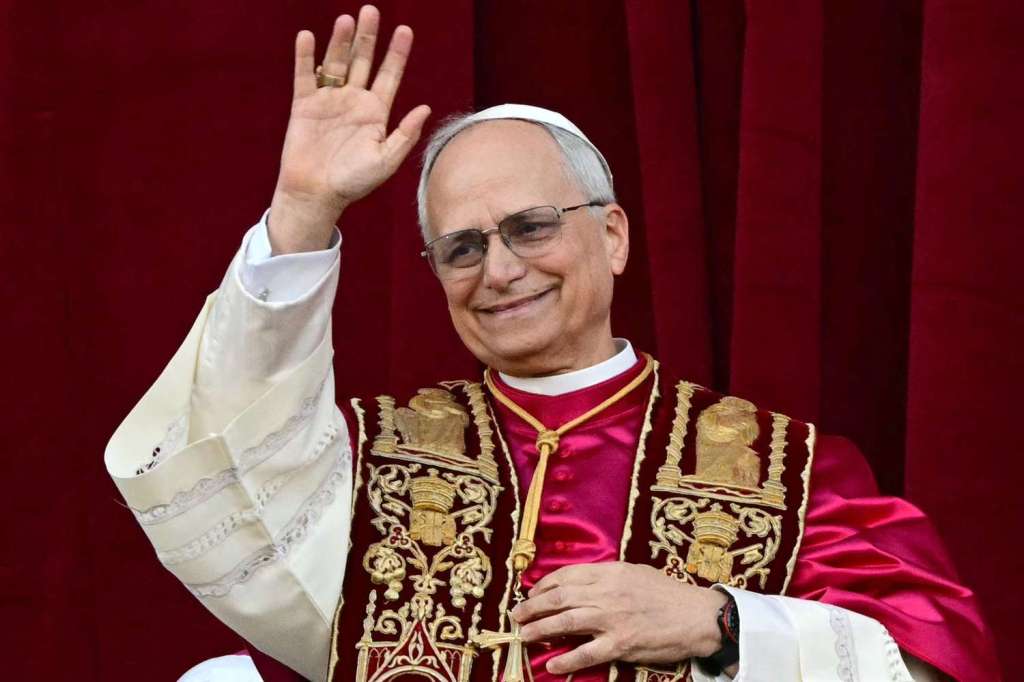
In his first words as pope, Leo paid tribute to his predecessor: “We still hear in our ears the weak but always courageous voice of Pope Francis who blessed us.” He called on the faithful to walk “united and hand-in-hand with God,” signaling both continuity and perhaps a fresh energy toward the Church’s mission.
A Pope of Social Justice
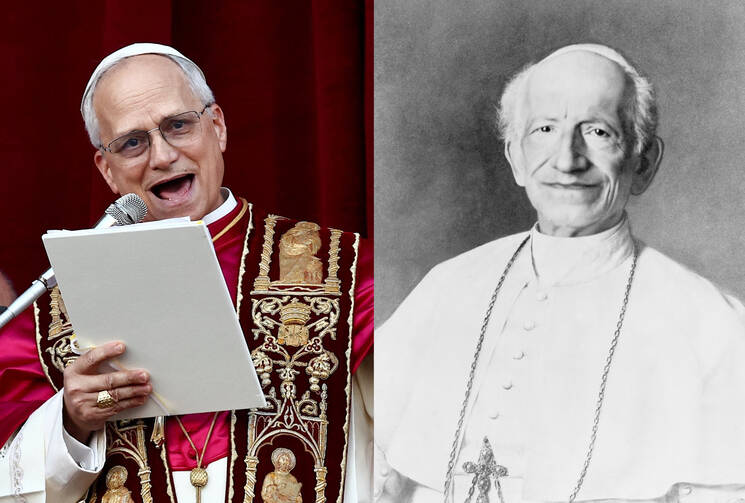
Choosing the name Leo is no small statement. It evokes not just legacy, but intention. Pope Leo XIII, whose papacy ran from 1878 to 1903, was a revolutionary voice on workers’ rights and social justice. By adopting this name, Leo XIV appears to be aligning himself with that same commitment to societal concerns. Former Archbishop of Boston, Cardinal Seán Patrick O’Malley, pointed out that Pope Leo XIII led the Church during times of massive upheaval — industrialization, immigration waves, and the rise of Marxism. Echoes of that era can be heard today.
While Pope Leo’s views on issues like LGBT inclusion are still being examined, he has endorsed some of Francis’ more progressive steps. He voiced support for the Vatican’s recent move to allow blessings for same-sex couples, while stressing that local bishops must apply these teachings with cultural sensitivity. On environmental issues, he has been vocal, urging the Church to move “from words to action” and championing practical efforts like installing solar panels at Vatican facilities.
He has also supported Francis’ decision to allow women to join the Dicastery for Bishops — a first in Church history — stating that their perspective brings a valuable contribution to discerning future leaders in the Church.
Tension with U.S. Politics
Leo XIV’s American identity comes with challenges — especially navigating the polarized landscape of U.S. politics. A social media account believed to be his, though not officially confirmed by the Vatican, has raised eyebrows for posts critical of the Trump administration’s immigration policies. In one post, he denounced rhetoric that demonized immigrants simply seeking better lives. In another, he challenged U.S. Vice-President JD Vance’s televised comments by quoting: “Jesus doesn’t ask us to rank our love for others.”
Though his exact political stance remains to be fully defined, what’s clear is his compassion for migrants and marginalized communities — a trait he shares with Francis.
A Mixed Legacy in Peru
While many Peruvians celebrate Leo’s elevation, not all views of his time in Chiclayo are flattering. Three women have come forward accusing a priest in the diocese of sexual abuse dating back to 2007. They claim that when they reported the abuse in 2022, the diocese — under then-Bishop Prevost — failed to act decisively.
Church officials insist that an investigation was opened and later closed due to insufficient evidence, but Peruvian prosecutors have since reopened the case. The BBC spoke to parishioners who both defend Leo and assert that the accusations are politically motivated. Still, the controversy looms, and Pope Leo XIV will need to confront the Church’s ongoing reckoning with abuse allegations as part of his papacy.
Looking Ahead
With roots in Chicago and branches extending to Peru, New Orleans, and Rome, Pope Leo XIV steps into his new role with the weight of expectation and the promise of reform. He inherits a Church navigating modern challenges — gender roles, climate crisis, inclusivity, and accountability.
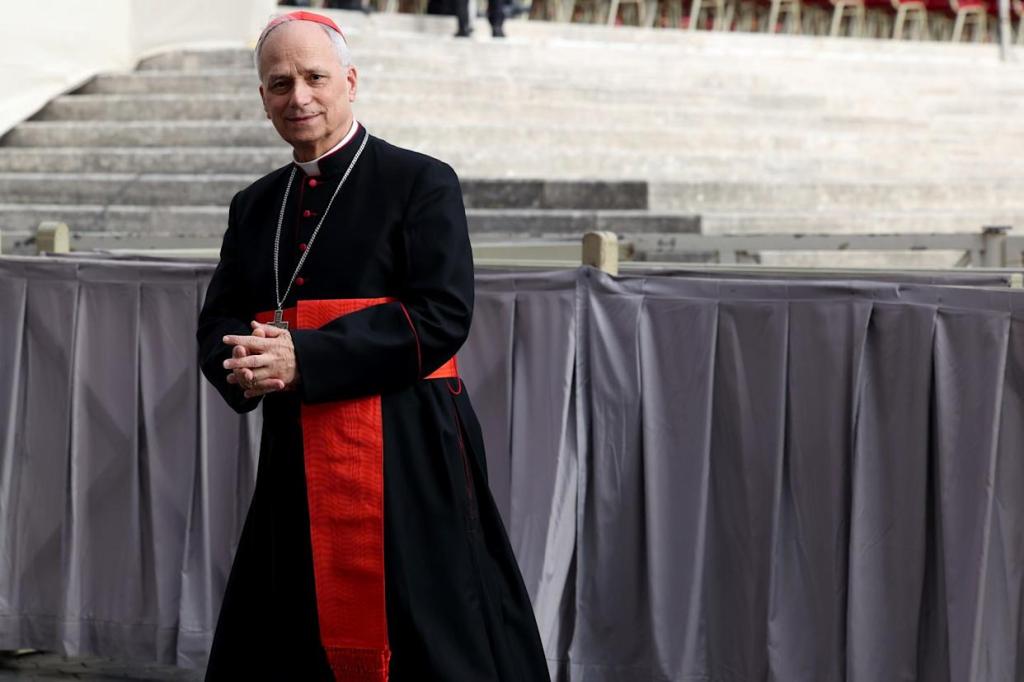
Yet, his track record shows a man who listens, adapts, and walks with the people — not above them.
In many ways, he is a pope of bridges: between the North and South, the center and margins, tradition and change. And as he stood on that balcony, addressing thousands who had never heard his name until moments earlier, he made his mission clear: unity, humility, and hope.

 OnlineFuss
Leave a comment