
When I saw the early trailers for Thunderbolts—yes, asterisks and all—I just knew it was going to be a hit for me.
The vibe, the banter, the dirty, messy team-up of antiheroes who don’t quite fit the mold? That’s my kind of Marvel movie. What really sold me, even before the premiere, was the character dynamic. It’s not ripped straight from the comics (duh), but there’s a raw, chaotic energy in how they’ve reimagined these familiar faces. And then there’s Bucky. The development he gets here is surprisingly satisfying. He’s not just “the Winter Soldier” anymore—he’s got purpose, even if he doesn’t fully want it. He’s quietly stepped into a leadership role among misfits who are just as bruised and broken as he is.
Marvel Studios has been desperate to recapture the magic of Phases 1 and 2. And let’s be honest: they haven’t exactly nailed it lately. Outside of Deadpool & Wolverine, fans haven’t been showing up like they used to. But Thunderbolts changes that. It’s the first film in a long time that actually feels like it belongs to that classic era of the MCU. It reminded me of when Guardians of the Galaxy took a gamble on a team of nobodies and somehow made us care deeply about a raccoon and a talking tree. This movie channels that same spirit—lower stakes on paper, but a lot more heart in execution.
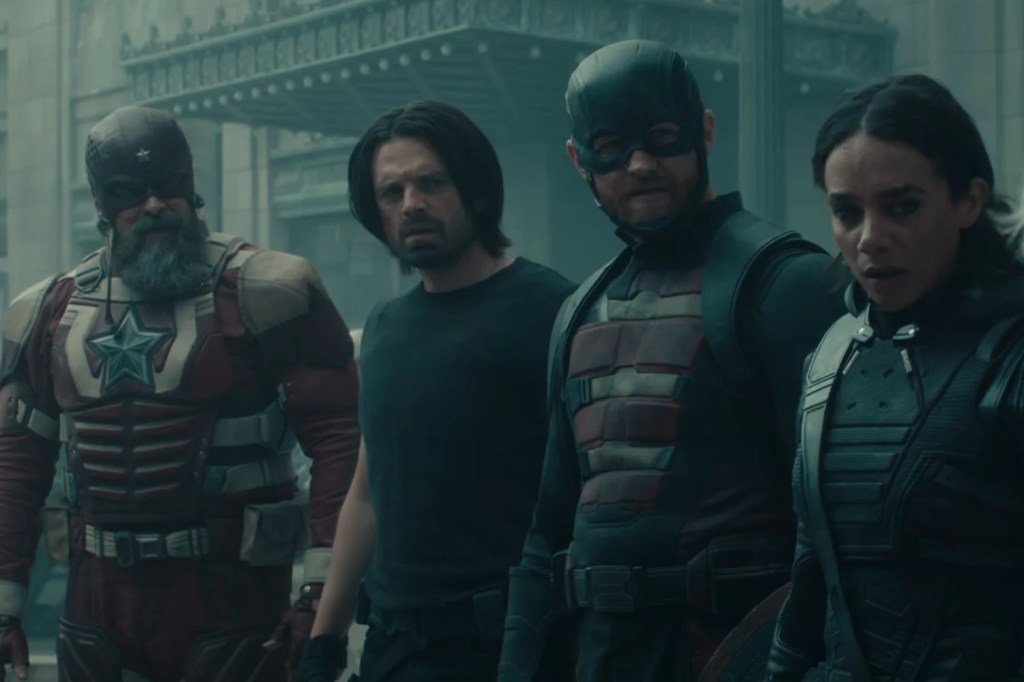
Directed by Jake Schreier, known more for his indie work than blockbuster spectacles, Thunderbolts isn’t your typical punch-everything-into-oblivion Marvel flick, even though it’s shot for IMAX. In fact, it’s surprisingly emotional. It dives headfirst into what it means to be a tool for violence, and what it takes to reclaim your humanity.

The emotional anchor here is Florence Pugh’s Yelena Belova. She’s still hurting—haunted by her past, by Natasha’s death, and by the endless missions she’s been sent on by the coldly manipulative Valentina Allegra de Fontaine (played with acidic brilliance by Julia Louis-Dreyfus). Yelena’s home is empty, her heart even emptier. She doesn’t want to be this person anymore. But after a deeply affecting reunion with her pseudo-father, Red Guardian (David Harbour), she decides to give it one last go.
Except—of course—it all goes sideways.
Trapped in an underground facility with USAgent John Walker (Wyatt Russell), Taskmaster (Olga Kurylenko), Ava Starr/Ghost (Hannah John-Kamen), and the wildcard Bob (Lewis Pullman), Yelena and the crew discover they’ve been set up. Betrayed by Valentina, they’re forced to work together not because they trust each other, but because they’ve got no other choice.
Now, here’s where things get interesting: there’s no real big bad. No galactic threat, no purple guy with an infinity glove. Instead, the movie leans hard into character drama. The tension and comedy come from watching these broken, emotionally wrecked individuals try to work as a team. Some will find the lack of a central villain a letdown, but I found the decision gutsy. It gives space for real growth, for laughs that come from somewhere honest, and for emotional moments that actually hit. That said, the final act still delivers some solid action, with the team forced to outwit their situation rather than punch their way out of it.
And let me just say—Florence Pugh is everything. Her portrayal of Yelena is easily one of the strongest character performances the MCU has delivered in a while. Pugh captures the complexity of someone who’s been used, who’s lost nearly everything, and who’s still choosing to fight—not for a paycheck, but for redemption.
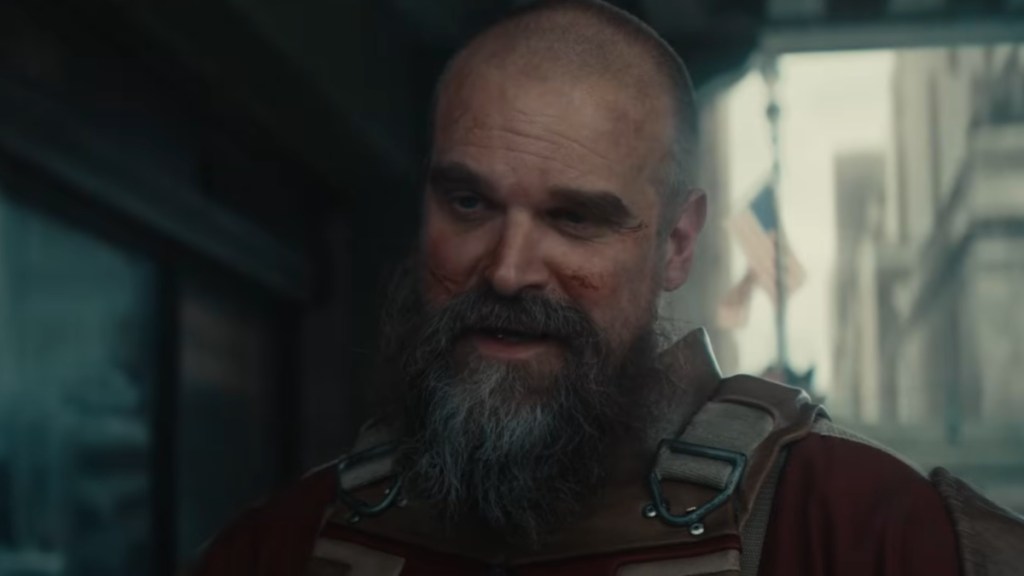
Harbour, as Red Guardian, is the comic relief that never gets old. His mix of washed-up bravado and fatherly guilt is pitch-perfect. And then there’s Bob—aka Sentry. I was hesitant about including such a powerful and controversial figure, but Lewis Pullman delivers a grounded, vulnerable take that brings a quiet power to the character. His arc is key to the film’s emotional climax.
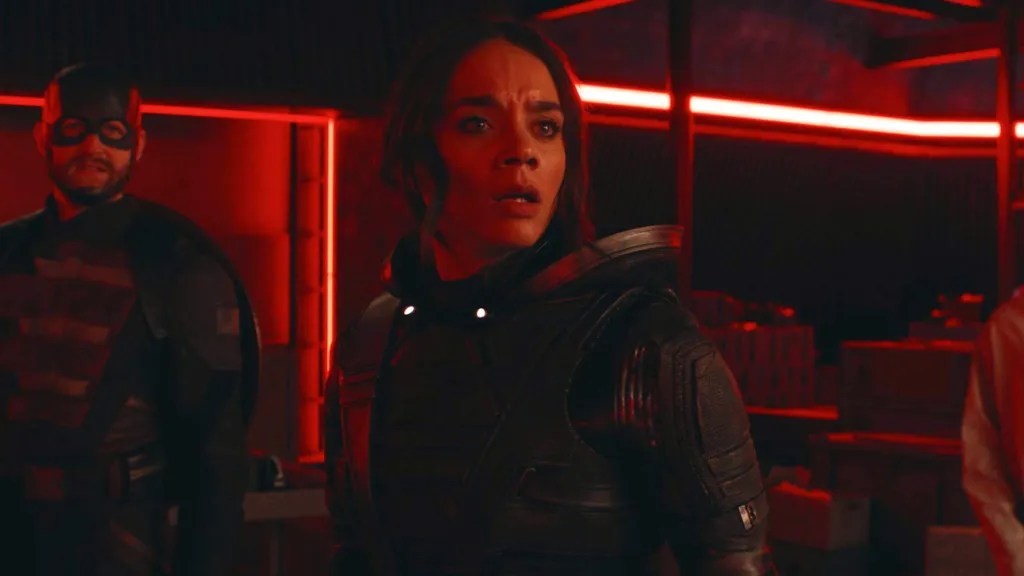
John Walker and Ghost, too, are given room to grow. Wyatt Russell captures the insecurity and resentment of a man always in Captain America’s shadow. Meanwhile, Ghost is more ethereal than ever, but this time, we actually get to see her be part of something.
As for Bucky? He’s not front and center, but he’s there, and when he shows up, it matters. There’s a jaw-dropping entrance that will have audiences hooting—and his journey from government operative to reluctant mentor adds a whole new layer to his arc. He might not be the star, but he’s the steady backbone, and it works.
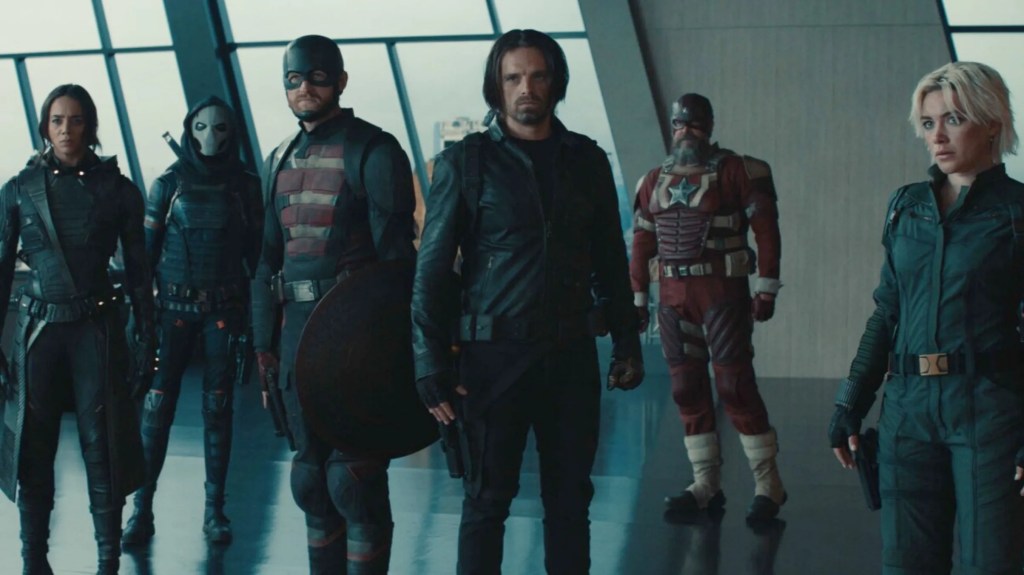
What’s refreshing about Thunderbolts is how standalone it feels. It’s not weighed down by multiverse nonsense or required viewing of six other shows. When the connections to the wider MCU do start creeping in, they’re handled with enough ambiguity to keep you guessing. The unpredictability is a major plus—this movie zigs when you expect it to zag.
In the end, Thunderbolts is more than just another Marvel outing. It’s a film about lost people trying to find meaning again. It trades flashy cameos and fan service for something much more rewarding: character. It’s messy, funny, sad, hopeful—and that’s exactly why it works.
Marvel might finally be back on track.

 OnlineFuss
Leave a comment