
In a moment that left scientists around the globe wide-eyed and awe-struck, a colossal squid—one of the ocean’s most mysterious and elusive creatures—was filmed alive in its deep-sea habitat for the very first time.
The footage, announced this Tuesday by the Schmidt Ocean Institute, was captured by a remotely operated vehicle (ROV) cruising nearly 1,100 feet (600 meters) beneath the surface of the South Atlantic Ocean, near the remote South Sandwich Islands. What the international team of researchers aboard the vessel saw wasn’t the terrifying behemoth they may have imagined, but rather a juvenile—only about 1 foot (30 centimeters) in length. But even in its youthful, glassy form, it was mesmerizing.
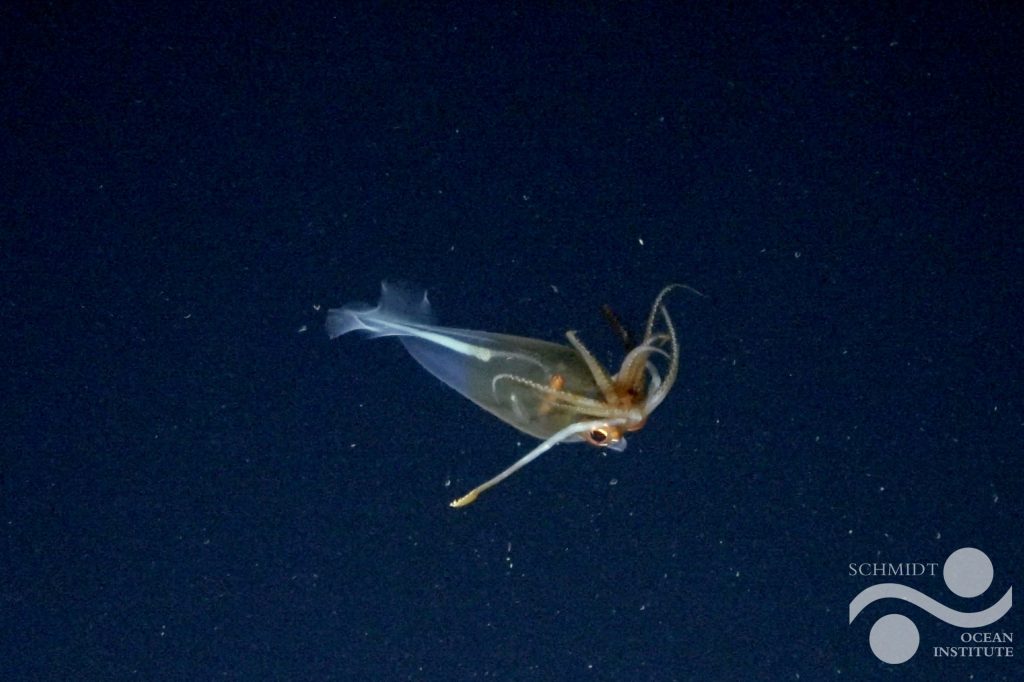
“It was so beautiful, so mesmerizing,” said deep-sea researcher and expedition member Taylor, recalling the moment. “Then someone watching the livestream said, ‘Is that a juvenile colossal squid?’ And everything changed.”
It’s the first time Mesonychoteuthis hamiltoni, better known as the colossal squid, has ever been observed alive in its natural environment. Previously, knowledge of this near-mythical species came solely from dead specimens brought to the surface, often found in the bellies of whales or snared in deep-sea fishing nets. To actually see one gliding gracefully through its true habitat is like unlocking a new level in the video game of ocean exploration.
Kat Bolstad, a squid researcher at Auckland University of Technology, helped confirm the species after the sighting. “I really love that we’ve seen a young colossal squid first. This animal is so beautiful,” she said. The team waited weeks to release the footage, verifying its authenticity with independent scientists before making the historic announcement.
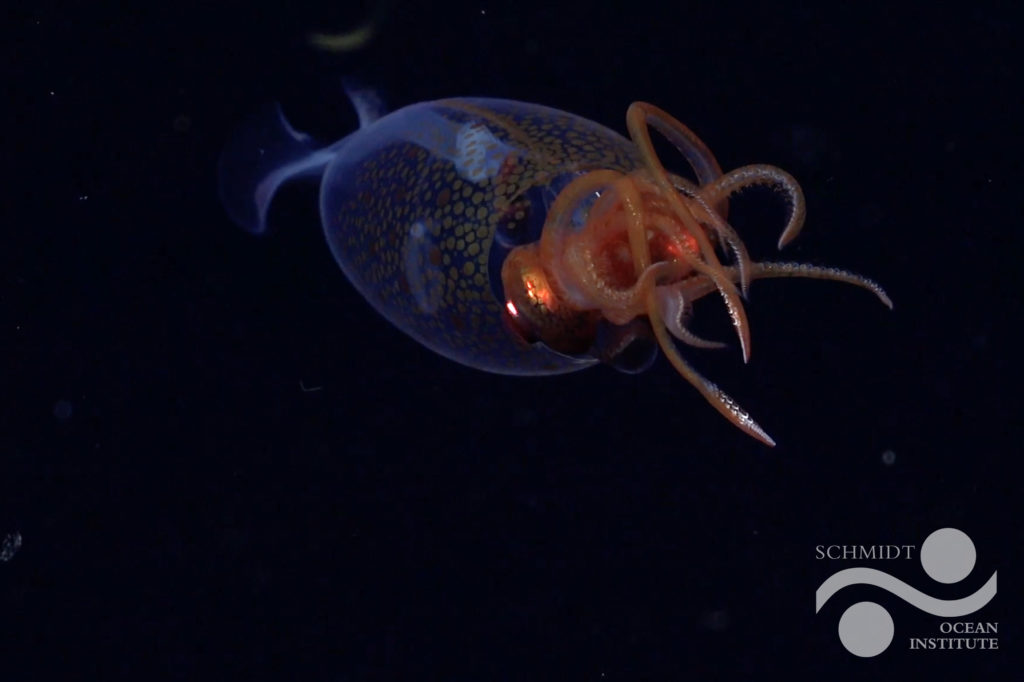
The juvenile appeared almost completely transparent, with delicate, thin arms. This ethereal look will vanish as it matures into a hulking creature stretching up to 23 feet (7 meters) and weighing as much as 1,100 pounds—the heaviest invertebrate known to science. Unlike the longer but more slender giant squid, the colossal squid earns its name for being, quite literally, the ocean’s heavyweight.
One of its most sinister trademarks? Hooks embedded along the middle of its eight arms. Yes, you read that right—hooks. As if a creature that grows to the size of a small fire truck wasn’t already formidable enough.
“This changes everything,” Taylor said. “Seeing it alive and in its element lets us understand how it behaves, how it moves, what kind of presence it has in the mid-water column—none of that is possible when you’re just looking at a dead animal on a lab table.”
The expedition is part of the Schmidt Ocean Institute’s ongoing mission to uncover the mysteries of the deep. Over the years, the team has managed to film at least four squid species in their natural habitats for the first time, including the Ram’s Horn Squid in 2020 and the Promachoteuthis just last year.
“Moments like these remind us how much we still don’t know,” said Jyotika Virmani, the Institute’s executive director. “The ocean is still full of secrets.”
Bolstad and the rest of the team are already refining their camera technology in hopes of catching an adult colossal squid in action. If successful, it would be one of the most thrilling deep-sea discoveries of the century.
For Taylor, though, it’s not just about scientific data. It’s about wonder.
“People are obsessed with space exploration,” she said. “But we have this astonishing, uncharted universe right here on Earth. The ocean is still one of the last frontiers, and we’ve only scratched the surface.”
So, while the stars may call to some, others are looking downward—to the dark, vast world beneath the waves, where creatures of legend still swim unseen.




 OnlineFuss
Leave a comment