
If you thought dire wolves were just a Game of Thrones fantasy, brace yourself—science just flipped the script.
In what’s being hailed as the world’s first successful de-extinction, Dallas-based biotech company Colossal Biosciences has done something straight out of a sci-fi movie: they’ve brought back the dire wolf. Not just as a concept or a DNA sample stored in a lab, but as living, breathing pups.
Yup, real dire wolf pups now exist.
Meet Romulus, Remus, and Khaleesi—three snowy white fluffballs that mark a massive milestone in genetic engineering. Created using ancient DNA, gene editing, and a whole lot of cutting-edge science, these pups are essentially the world’s first hybrid species brought back from extinction. Colossal confirmed on Monday that they’ve not only made it happen but that the puppies are healthy and thriving in a secure, 2,000-acre facility protected by zoo-grade fencing, drones, and live security monitoring.

Let that sink in for a second: something that vanished 12,500 years ago is walking, howling, and existing again.
AN ICE AGE PREDATOR REBORN
The dire wolf (Aenocyon dirus), once a fearsome apex predator across North America, was larger and bulkier than the modern gray wolf. Think bigger jaws, thicker fur, and a broader skull. You might recognize the resemblance to Ghost, Jon Snow’s iconic companion from Game of Thrones—and there’s a reason for that. The show’s creators drew inspiration directly from this prehistoric beast.

Now, thanks to Colossal’s unique approach to de-extinction, these legendary wolves are more than CGI or fossilized skeletons.
“We took DNA from a 13,000-year-old tooth and a 72,000-year-old skull and made healthy dire wolf puppies,” said Colossal co-founder and CEO Ben Lamm.
That statement alone sounds like it needs its own theme song.
THE SCIENCE BEHIND THE COMEBACK
So how do you bring back a species that hasn’t been around since mammoths roamed the Earth?
First, Colossal’s team reconstructed two full dire wolf genomes using ancient DNA pulled from fossils. They compared this genetic blueprint with the DNA of modern canids—wolves, jackals, foxes—to pinpoint the specific gene variants that gave dire wolves their size, white coats, and other unique traits.
From there, they used CRISPR gene-editing technology to modify the DNA of gray wolf cells, making 20 precise edits across 14 genes. These altered cells were then cloned and introduced into donor eggs—taken from gray wolves—before being implanted into domestic dogs (big, mixed-breed hounds, to be specific).
After 65 days, Romulus and Remus were born via C-section on October 1, 2024. Three months later, Khaleesi joined the pack on January 30, 2025.
Not only did this process bring back the dire wolf in phenotype (its observable traits), but it did so without resorting to invasive procedures. Instead of extracting large tissue samples, scientists collected blood from gray wolves to gather the necessary cells. Compared to older cloning methods (like Dolly the sheep), this was a much gentler and cleaner approach.
IS THIS A JURASSIC PARK MOMENT?
Okay, we know what you’re thinking—does this mean Jurassic Park is real now? Will we see raptors running around in 2030?
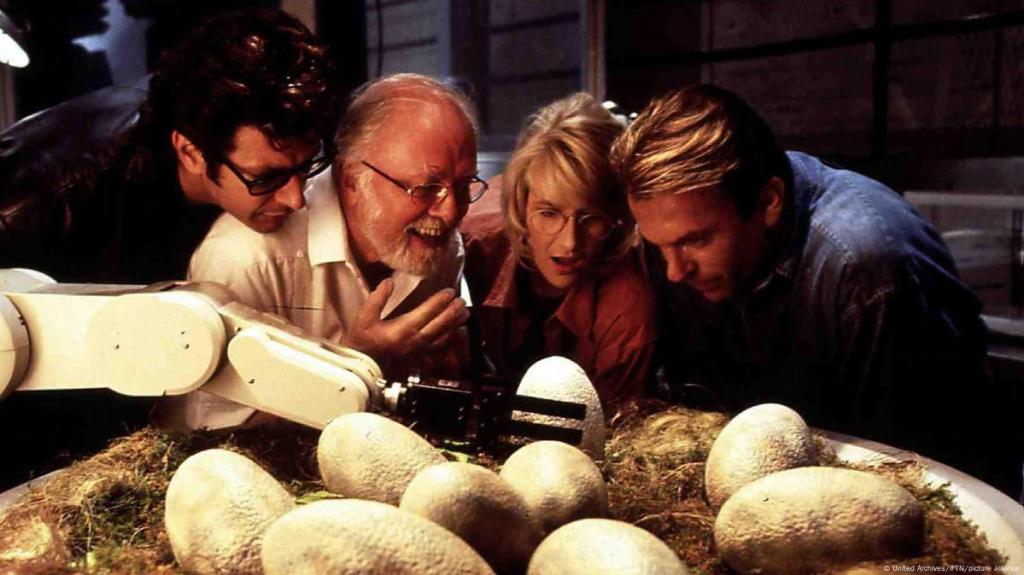
Let’s hit the brakes on that one. As cool (and terrifying) as it sounds, dinosaurs lived millions of years ago, and their DNA has long since degraded beyond usable levels. Unlike dire wolves, whose fossils still contain viable genetic material, T. rex remains don’t exactly offer much to work with.
So no, don’t expect a dino park anytime soon—but hey, if they start selling plush Romulus toys, we’re all in.
WHY THIS MATTERS (BEYOND THE COOL FACTOR)
Colossal isn’t just doing this for the spectacle. The same technologies used to bring back dire wolves are already being applied to help preserve endangered species—like the red wolf, one of the world’s most critically endangered canids. The company recently announced two litters of cloned red wolves using improved, less invasive cloning methods developed through the dire wolf project.
While critics argue the massive funding (over $435 million raised) could be better spent on existing conservation efforts, others believe this type of tech could be the future of species preservation and environmental restoration.
Still, the question remains: what role will these resurrected animals play? Can they really rejoin ecosystems? Or are they destined to be scientific marvels kept behind secure fences?
Environmental ethicist Christopher Preston weighed in, praising Colossal for its thoughtful approach and humane practices, but he also questioned the real-world applicability.
“In states like Montana, we are currently having trouble keeping a healthy population of gray wolves,” he said. “It’s hard to imagine dire wolves ever being released.”
A HOWL FROM THE PAST
Despite the philosophical questions and ethical debates, one thing is undeniable—this is a huge leap for science. And whether or not these wolves ever roam free, the fact that they exist again is monumental.

As evolutionary genomics professor Love Dalén put it, “It carries dire wolf genes, and these genes make it look more like a dire wolf than anything we’ve seen in the last 13,000 years. And that is very cool.”
No arguments here.
So maybe we’re not building Jurassic Park tomorrow, but today… we’ve got a Game of Thrones creature breathing new life.
And that’s something worth howling about.




 OnlineFuss
Leave a comment