
The rapid advancement of technology is reshaping economies, societies, and industries worldwide. As we enter a new era of digital infrastructure, nations must strategically position themselves to harness the benefits of digital transformation.

The Global Connectivity Index (GCI) serves as a key reference for policymakers and industry leaders, offering a roadmap for navigating the digital economy.
Understanding the Global Connectivity Index (GCI)
The GCI was first published in 2014 and has since evolved into a comprehensive benchmarking tool, tracking the digital transformation progress of 79 nations. It evaluates a country’s digital economy readiness based on 40 indicators categorized under four economic pillars: Supply, Demand, Experience, and Potential. Additionally, the GCI examines four key technology enablers: Broadband, Cloud Computing, Artificial Intelligence (AI), and the Internet of Things (IoT).
Countries are classified into three GCI clusters based on their scores and GDP per capita:

- Starters (GCI Score: 23-39) – Countries in the early stages of digital infrastructure development, focusing on expanding connectivity.
- Adopters (GCI Score: 40-64) – Nations experiencing rapid growth from ICT investments, focusing on industry digitization.
- Frontrunners (GCI Score: 65-85) – Developed economies focusing on enhancing user experience, big data, and IoT applications.
Note: The 2024 Global Connectivity Index (GCI) is sourced from Huawei and measures global progress in digital infrastructure and connectivity.
The Widening Global Digital Divide
A key finding of the GCI is the gap between Frontrunners and countries with lower scores. This reflects an ICT (Information and Communications Technology) version of the “Matthew Effect,” where countries with established digital infrastructure continue to expand their advantages while others struggle to keep up.
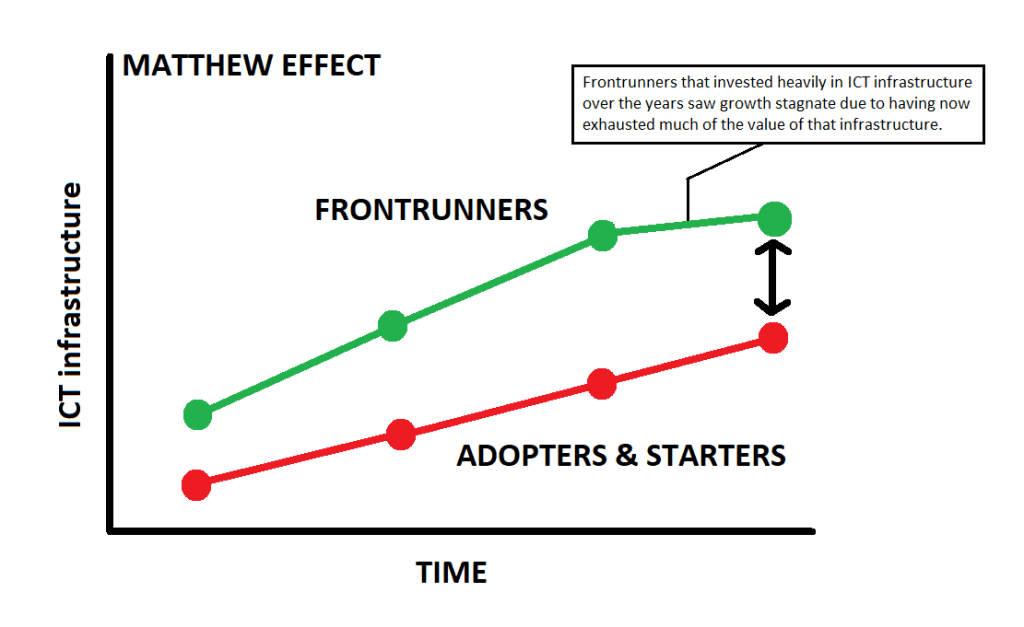
For Starters and Adopters, closing this gap is critical for long-term economic sustainability. In order to achieve this, a country must have the five key roles essential for building a global Intelligent Connectivity ecosystem. These are Decision Makers (countries, organizations, or enterprises), Data Scientists, ICT Companies, Data Collectors, and End Users.
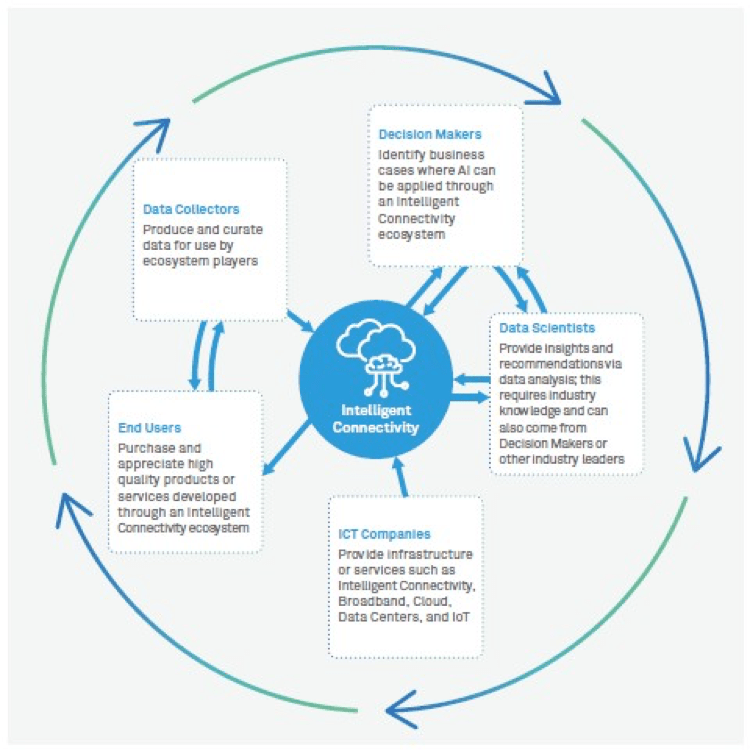
By working together and utilizing each other’s strengths, these roles help drive innovation and create value for nations, businesses, and society as a whole.
The Economic Impact of ICT Investments
Over the years, GCI research has demonstrated the tangible benefits of ICT investments:
- A 1-point increase in GCI score correlates with a 2.3% rise in productivity, a 2.2% increase in innovation, and a 2.1% improvement in national competitiveness.
- A 20% increase in ICT investment can drive a 1% rise in GDP.
- AI and Intelligent Connectivity have the potential to accelerate economic growth up to 2.4 times faster for countries with higher GCI scores.
Challenges and Opportunities in the Digital Economy
While digital transformation presents immense opportunities, nations must navigate several challenges:
- Infrastructure Development: Ensuring reliable and widespread broadband access is fundamental for digital progress.
- Workforce Readiness: Upskilling and reskilling programs are essential to prepare workers for a digital-first economy.
- Cybersecurity and Digital Governance: Strong regulatory frameworks are necessary to protect data privacy and ensure secure transactions.
- Global Collaboration: Countries must embrace win-win partnerships with ICT companies, data scientists, and industry stakeholders to foster digital innovation.
Key Technologies Shaping the Future of Digital Infrastructure
To remain competitive in the digital age, countries must integrate advanced technologies into their infrastructure. Four major enablers stand out:
- Broadband Expansion – High-speed internet access is the foundation of digital transformation. Governments must prioritize nationwide broadband coverage, including fiber-optic networks and 5G deployment, to enable seamless digital experiences.
- Cloud Computing – Cloud infrastructure enhances efficiency, scalability, and data security for businesses and government services. Investments in cloud adoption reduce operational costs and increase accessibility to digital tools.
- Artificial Intelligence (AI) – AI is revolutionizing industries through automation, predictive analytics, and intelligent decision-making. Nations that integrate AI into their economies can enhance productivity and foster innovation in sectors such as healthcare, finance, and logistics.
- Internet of Things (IoT) – IoT connects devices and systems, enabling real-time monitoring and automation across industries. Smart cities, industrial automation, and connected healthcare are among the many applications that can drive economic growth.
Strategies for Countries to Accelerate Digital Readiness
While adopting these technologies is crucial, nations must implement strategic policies and investments to fully capitalize on digital transformation. Key approaches include:
1. Digital Infrastructure Investments
- Governments should prioritize broadband expansion to ensure connectivity in rural and underserved areas.
- Public-private partnerships (PPPs) can drive investment in digital infrastructure, reducing the financial burden on governments.
- 5G networks and edge computing should be rapidly deployed to support AI-driven applications and IoT ecosystems.
2. Workforce Development and Digital Skills
- National education systems must integrate digital literacy and coding programs to prepare future generations for the digital economy.
- Upskilling and reskilling initiatives should be implemented to help workers adapt to automation and AI-driven industries.
- Governments and businesses should collaborate on tech-driven training programs to bridge the talent gap in ICT-related fields.
3. Cybersecurity and Digital Governance
- Strengthening data protection laws and cybersecurity frameworks is critical to securing digital transactions and personal information.
- Governments must establish clear AI and IoT regulations to ensure ethical use and prevent misuse of digital technologies.
- International cooperation on cyber threat intelligence sharing will help nations combat cyberattacks and digital fraud.
4. Innovation and Entrepreneurship Support
- Encouraging startups and tech incubators can drive local innovation and attract global investors.
- Providing tax incentives and funding opportunities for businesses adopting digital solutions will accelerate industry-wide transformation.
- Smart regulations that promote open data access can fuel AI and big data-driven innovation.
The Future of Digital Transformation
Countries that embrace these strategies will position themselves as leaders in the digital economy. As AI, IoT, and cloud computing continue to evolve, national policies must remain adaptable to emerging trends.
The digital era is no longer a vision for the future—it is happening now. Nations that act decisively and invest in digital infrastructure will drive economic growth, enhance global competitiveness, and improve the quality of life for their citizens.
By leveraging the insights from the Global Connectivity Index (GCI) and implementing forward-thinking policies, governments can ensure their countries are fully prepared for the next wave of digital transformation.
Upcoming Discussion on Digital Infrastructure
A similar topic will be explored at the Philippines Cloud & Datacenter Convention 2025, which will take place at the Conrad Hotel on March 27, 2025. One of the key speakers, Stephen Davis, Chairman & Co-Founder of the Data Center Association of the Philippines, will discuss the future of cloud and data center technologies, their role in shaping digital economies, and the necessary steps for nations to stay competitive in this evolving landscape. This event will provide valuable insights for policymakers, industry leaders, and technology enthusiasts.
For more details, visit: Philippines Cloud & Datacenter Convention 2025.




 OnlineFuss
Leave a comment