
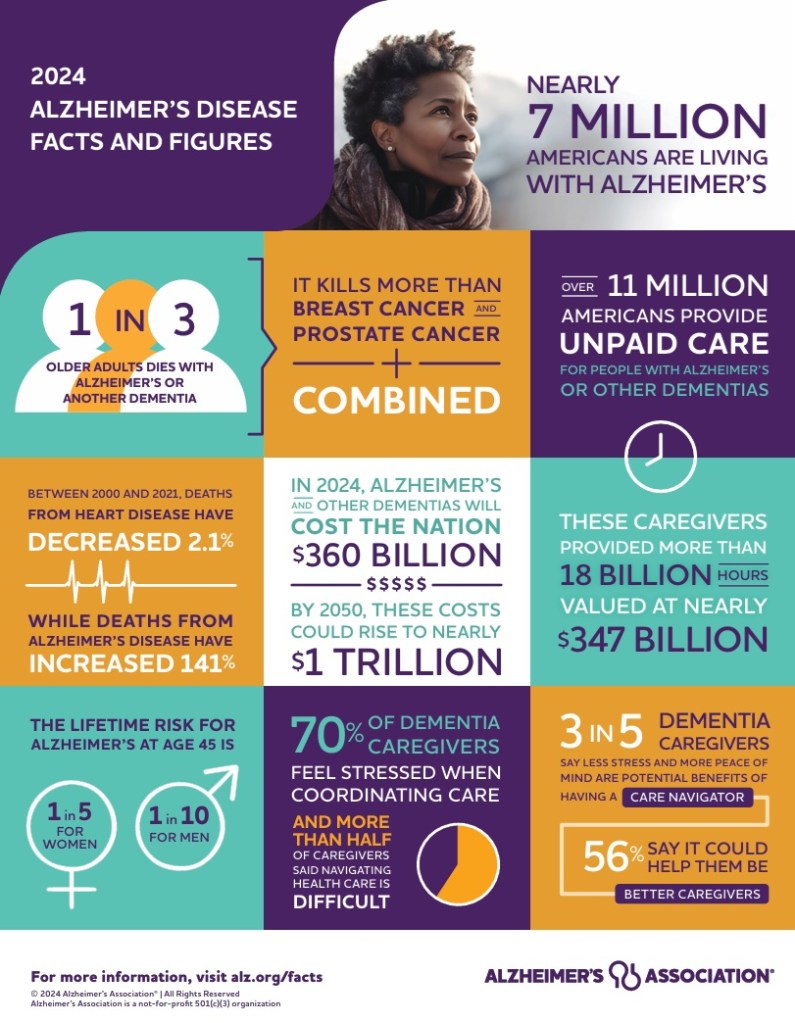
The increasing prevalence of Alzheimer’s disease (AD) and dementia among the aging population presents significant challenges. Technological advancements are proving to be instrumental in providing solutions that enhance the quality of life for individuals affected by these conditions and their caregivers. This article explores the various technological innovations that are making a difference, based on a comprehensive review of current research and insights from the Alzheimer’s Society.
Technological Solutions for Alzheimer’s and Dementia
Wearable Devices and Sensors

Wearable devices, such as smartwatches and fitness trackers, are equipped with sensors that monitor vital signs, detect falls, and track location through GPS. These devices are particularly useful in preventing wandering, a common and dangerous behavior in dementia patients. GPS-enabled devices allow caregivers to locate their loved ones quickly, ensuring their safety.
Smart Home Technologies

Smart home systems integrate various technologies to create a safer living environment. For instance, smart medication dispensers remind users to take their medication at the correct times and can even alert caregivers if a dose is missed. Activity sensors and smart cameras can monitor daily activities, detecting unusual patterns that may indicate a problem, such as a fall or prolonged inactivity.
Cognitive Assistance Tools
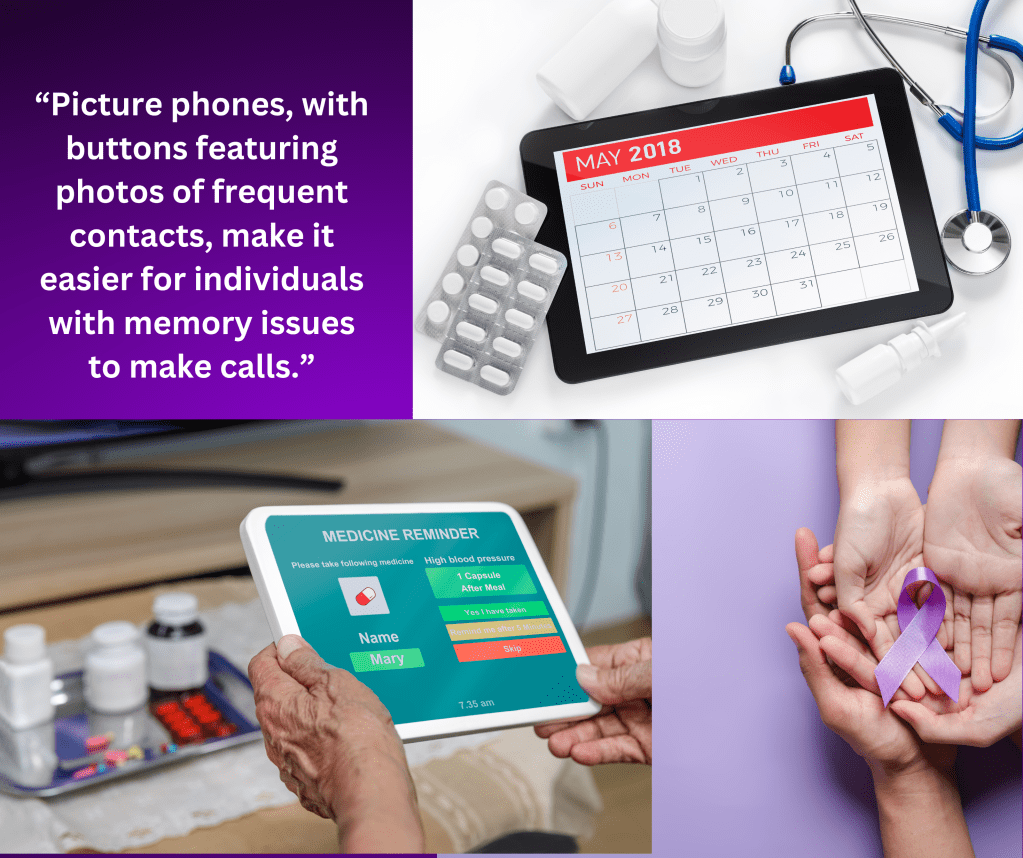
Technologies designed to aid cognitive function include digital reminders, interactive calendars, and specialized apps that help manage daily tasks. Picture phones, with buttons featuring photos of frequent contacts, make it easier for individuals with memory issues to make calls. These tools help maintain a degree of independence and reduce the cognitive load on patients.
Enhancing Safety and Independence
Medication Management

Managing medication schedules can be challenging for individuals with dementia. Simple solutions like pillboxes labeled with days of the week or high-tech automated dispensers that alert users when it’s time to take their medication can significantly improve adherence and reduce health risks.
Emergency Response Systems

Emergency response systems, such as wearable panic buttons, enable users to call for help immediately. Advanced systems can automatically detect emergencies like falls and alert caregivers or emergency services, ensuring timely assistance.
Addressing Social Isolation
Communication Tools
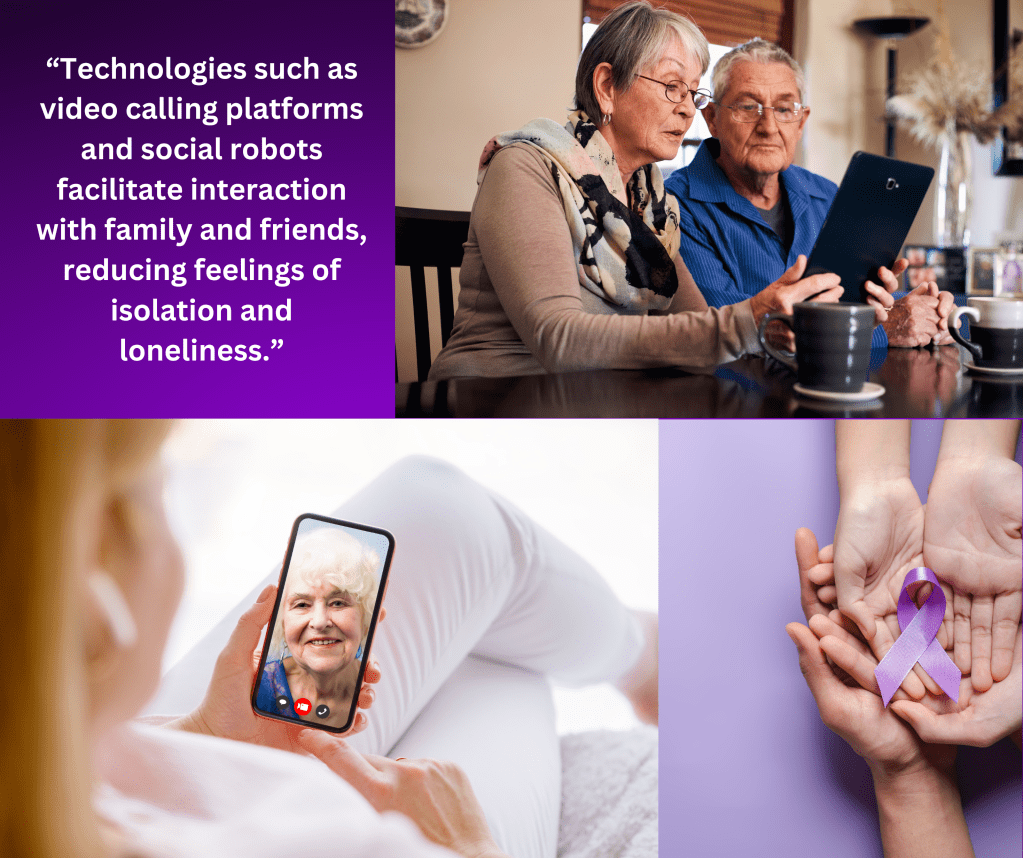
Maintaining social connections is vital for the emotional well-being of individuals with dementia. Technologies such as video calling platforms and social robots facilitate interaction with family and friends, reducing feelings of isolation and loneliness.
Virtual Reality (VR) and Augmented Reality (AR)
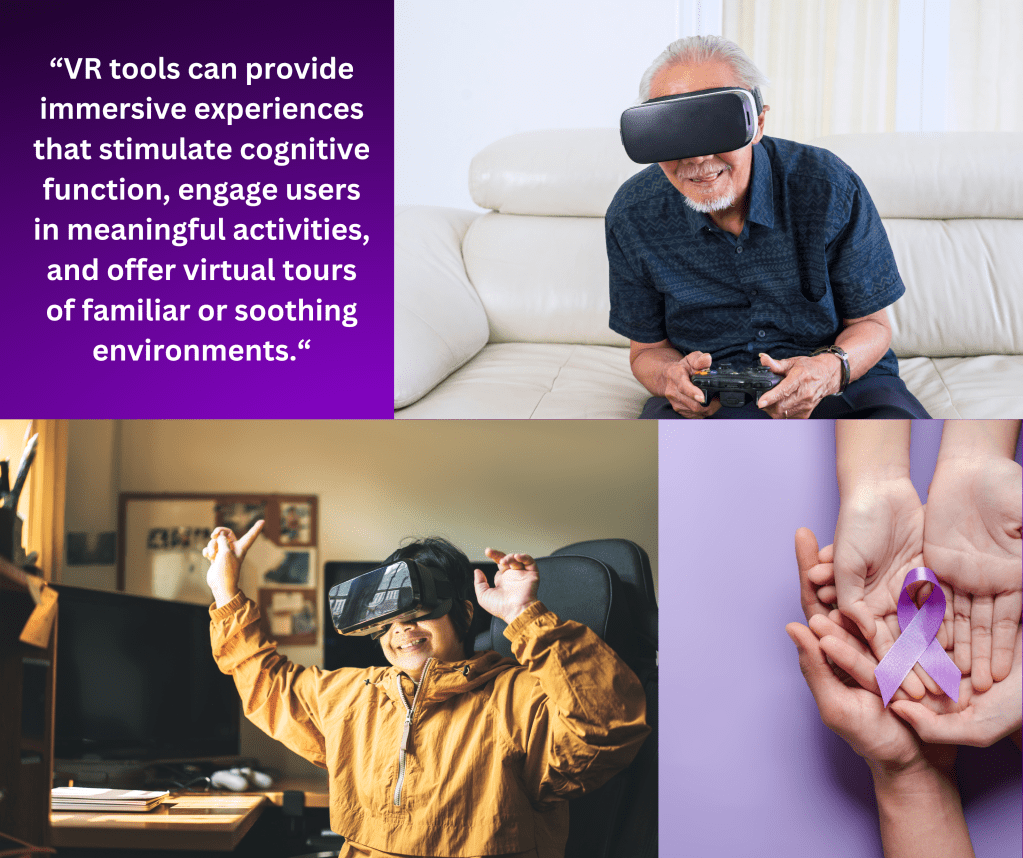
VR and AR technologies are being explored for their potential therapeutic benefits. These tools can provide immersive experiences that stimulate cognitive function, engage users in meaningful activities, and offer virtual tours of familiar or soothing environments.
Overcoming Challenges

Despite the promise of these technologies, several challenges remain. Acceptance and usability are crucial factors; devices must be easy to use and comfortable for individuals with dementia. Privacy and data security concerns must also be addressed, ensuring that sensitive information is protected. Moreover, the integration of these technologies into daily care routines requires careful planning and support from healthcare professionals.
Conclusion
Technological advancements are offering innovative solutions to improve the lives of individuals with Alzheimer’s and dementia. From wearable devices and smart home systems to cognitive assistance tools and communication technologies, these innovations are helping to enhance safety, independence, and social connectivity. As research continues to evolve, it is essential to address the challenges of usability, privacy, and integration to fully realize the potential of these technological solutions.
For more detailed information on how technology can assist those with dementia and Alzheimer’s, you can refer to the Alzheimer’s Society website and the comprehensive review by Maresova et al. (2018) in ‘Current Alzheimer Research’.




 OnlineFuss
Leave a comment